Skalka
Předmostí, Tschechien
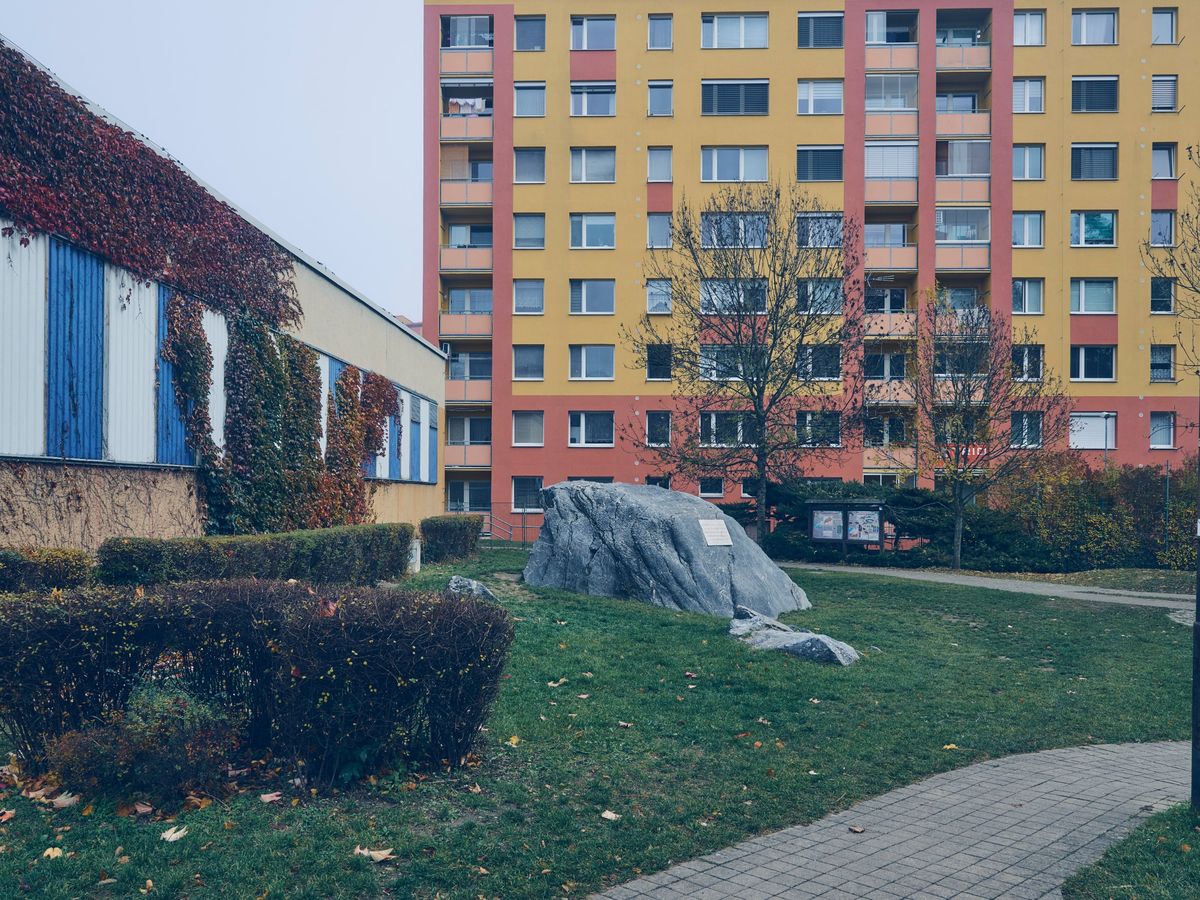
Vor rund 27.000 Jahren lag am Fuß des Kalksteinfelsens Skalka über Jahrtausende ein Lagerplatz eiszeitlicher Mammutjäger. Archäologen fanden dort die Überreste von über tausend Mammuts.
1571 notierte Jan Blahoslav: „Noch immer gräbt man im Hügel unter der Skalka bei Předmostí große Knochen von Riesen aus: Zähne so groß wie eine Faust, Rippen wie Balken.“
Der Felsen war einst höher als der Kirchturm von Předmostí. Im 19. und 20. Jahrhundert wurde die Skalka abgetragen, um Baumaterial zu gewinnen. Den umliegenden Löss baute man für die Ziegelherstellung ab. Hunderte Wagenladungen Mammutknochen wurden dabei abtransportiert, zu Dünger zerschlagen oder zu Knochenkohle verarbeitet, mit der man Zucker bleichte.
Der heute noch sichtbare Stein ist der letzte Rest des Felsens. Er entstand vor rund 380 Millionen Jahren auf dem Grund eines tropischen Meeres. 1982 begann um ihn herum der Bau einer Plattenbausiedlung.
Přerov-Předmostí, Tschechien
Skalka
Around 27,000 years ago, a camp of Ice Age mammoth hunters lay for thousands of years at the foot of the limestone outcrop known as Skalka. Archaeologists discovered the remains of more than a thousand mammoths.
In 1571, Jan Blahoslav wrote: “Great bones of giants are still being dug up from the hill beneath Skalka near Předmostí: teeth as large as a fist, ribs like beams.”
The outcrop once stood taller than the church tower of Předmostí. During the 19th and 20th centuries, Skalka was quarried for building stone, while the surrounding loess was excavated for brickmaking. Hundreds of cartloads of mammoth bones were removed in the process, crushed for fertiliser or turned into bone char, which was used to whiten sugar.
The rock still visible today is the last remnant of the outcrop. It formed around 380 million years ago on the floor of a tropical sea. In 1982, construction of prefabricated apartment blocks began around it.
Chicken Age · Urban Zintel
