Spix’s Macaw
Cyanopsitta spixii
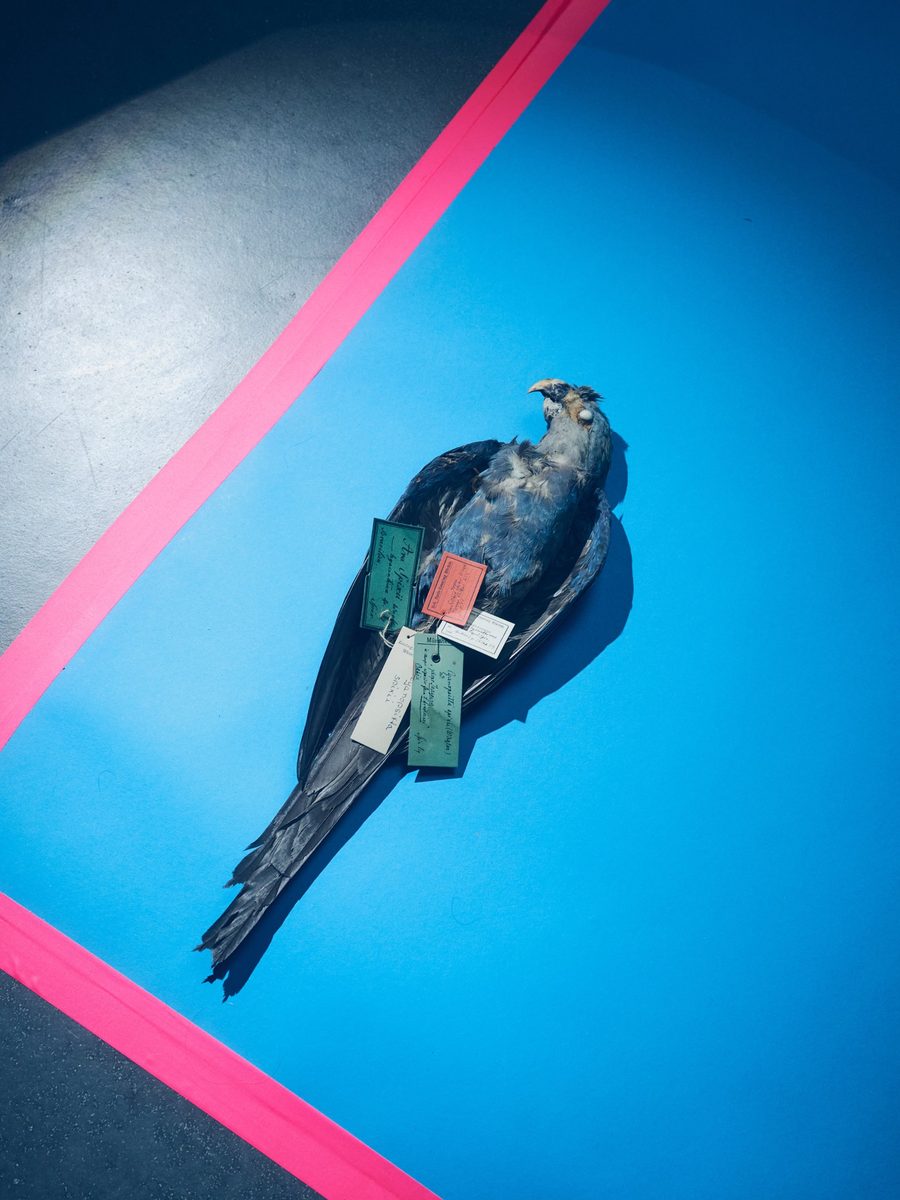
In 1819, the Bavarian naturalist Johann Baptist von Spix shot a blue macaw in Brazil. It became the type specimen of a new species named after him and is still kept in Munich today.
During the 20th century, the population shrank through habitat loss and the bird trade. According to a report in The New Yorker, only two nests were known in 1985. Their chicks were sold after each breeding season for $20,000 to $80,000 a pair.
In 1990, only one wild male was still known. It had paired with a blue-winged macaw female. In 1995, a Spix’s macaw female from captivity was brought to him. After seven weeks she was killed, probably by a power line. In 2000, the male disappeared too.
The species survived only in human care until 2022, when birds were released into the wild again. In 2023, 214 of the world’s 331 Spix’s macaws lived at the breeding facility of the ACTP association in Rüdersdorf near Berlin.
That same year, the ACTP moved 26 birds without Brazil’s consent to Vantara, a private zoo in India. It calls itself the world’s largest animal rescue centre and lies next to the world’s largest oil refinery.
In 2024, Brazil ended its cooperation with the ACTP.
In 2025, the last eleven free-living birds were recaptured.
All were infected with circovirus.
Zoologische Staatssammlung München
Chicken Age · Urban Zintel
