Kitchen Midden
Køkkenmøddinger
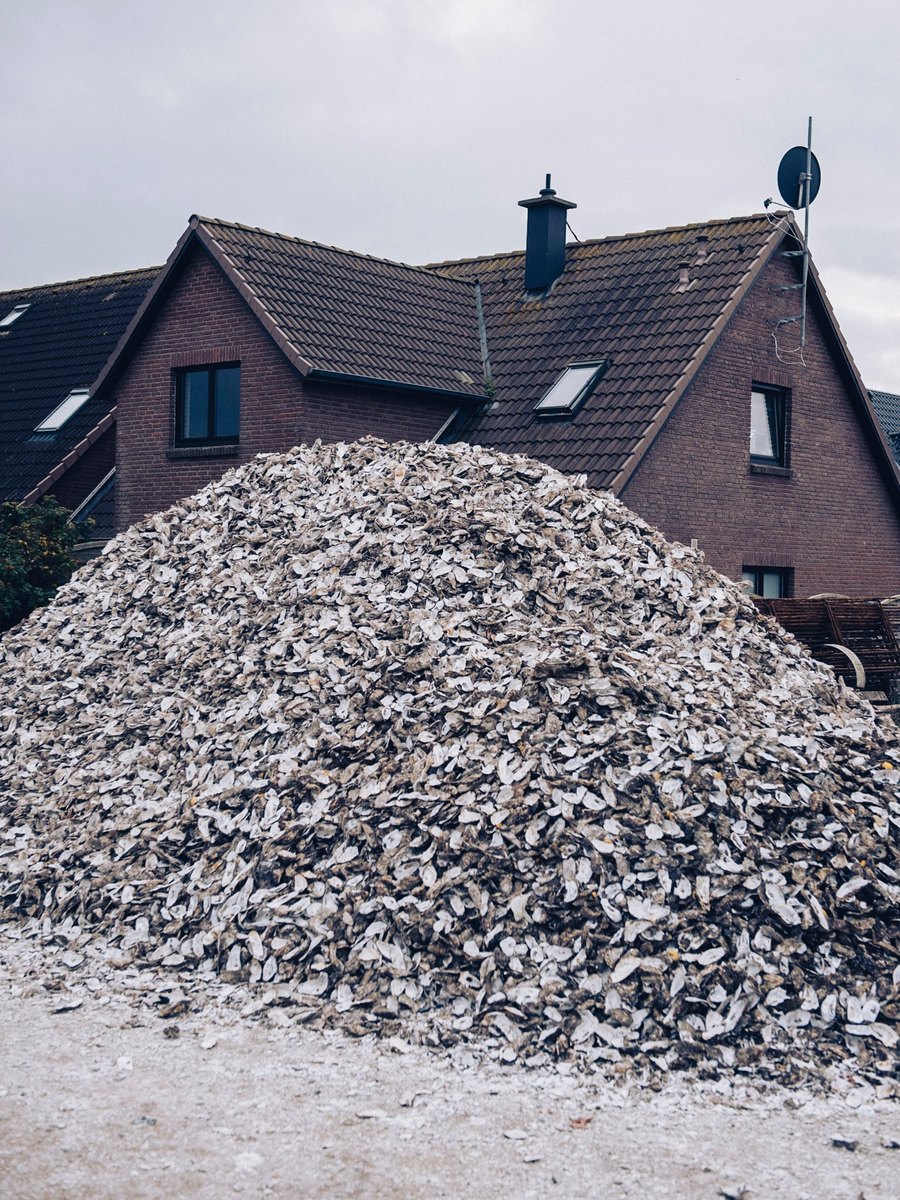
Around 164,000 years ago, people left mussel shells in a cave on the coast of South Africa. They are among the earliest known evidence of humans eating shellfish.
On the coast of Denmark, around 6,500 years ago, a heap formed from the shells of an estimated 20 million oysters. It is some 125 metres long, 20 to 30 metres wide and up to 1.2 metres high.
Around 100 BC, the Roman Sergius Orata laid out artificial oyster beds near Naples and made a fortune from them. Oysters became a luxury of the Roman elite.
In 1836, Charles Dickens wrote in The Pickwick Papers: “Poverty and oysters always seem to go together.” Around 1840, Londoners ate some 500 million oysters a year; three cost a penny.
In 1850, Danish researchers recognised the shell heaps on their coast as human refuse. They called the heaps køkkenmøddinger, kitchen middens.
In 1864, some 700 million oysters a year were eaten in London. In the decades that followed, many European stocks collapsed.
Until the 1920s, more than a million oysters a year were fished off Sylt. Around 1950, the European oyster disappeared from the German Wadden Sea.
In 1986, 150,000 Pacific oysters from Irish hatcheries were set out in Blidsel Bay near List. They are sold as “Sylter Royal”. The species originates in East Asia. A few years later, it was spreading beyond the farms into the Wadden Sea.
In 2023, the Pacific oyster accounted for 96 per cent of oyster farming in the EU.
Dittmeyer's Austern-Compagnie, List auf Sylt
Chicken Age · Urban Zintel
