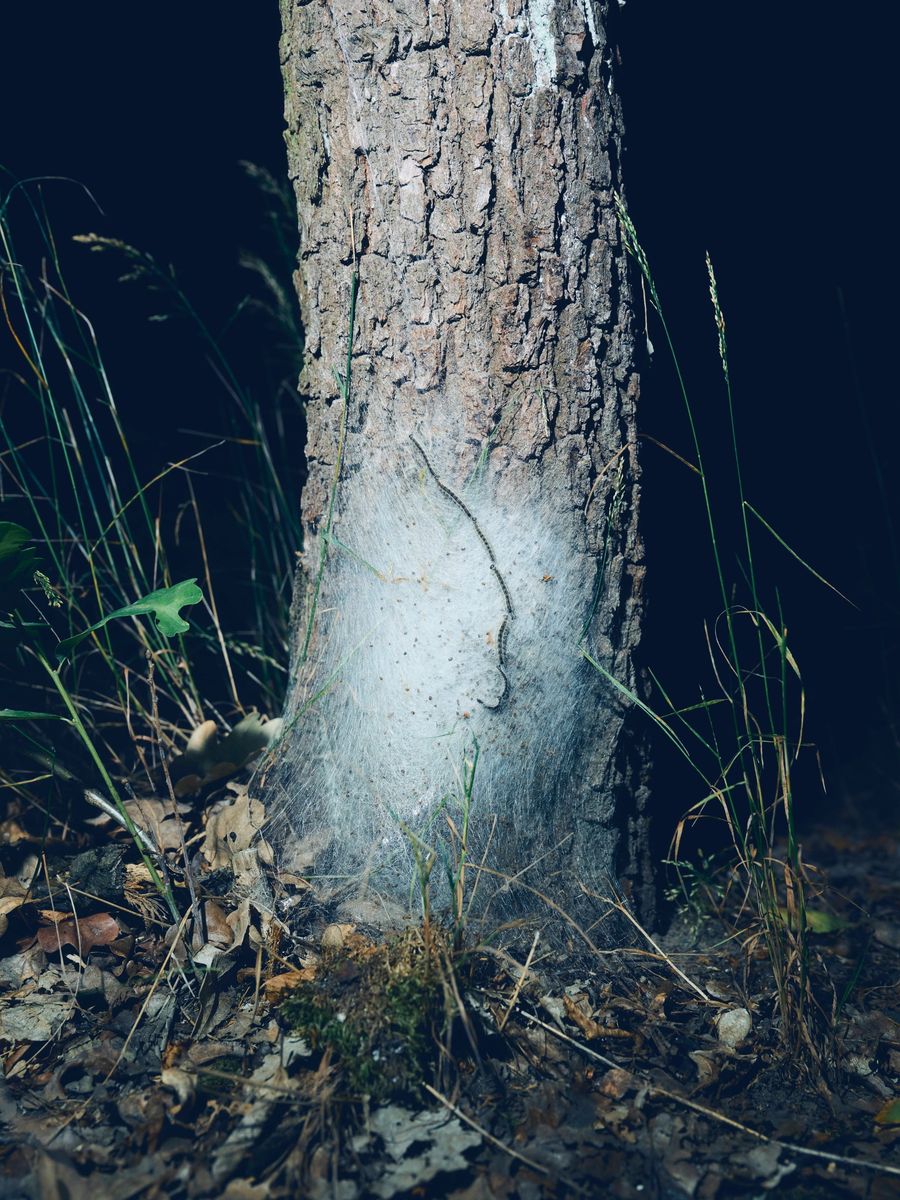
Oak Processionary MothThaumetopoea processioneaA native species that became a public menace.The caterpillars form dense nests on oak trees. Their toxic stinging hairs can cause rashes, fever and respiratory problems in humans. The hairs remain active for up to five years, long after the caterpillars have gone.Once a little-noticed forest insect, the oak processionary moth is benefiting from climate change.Neither invasive nor harmless, it shows how ecological roles shift under human influence.Jungfernheide, BerlinChicken Age · Urban Zintel